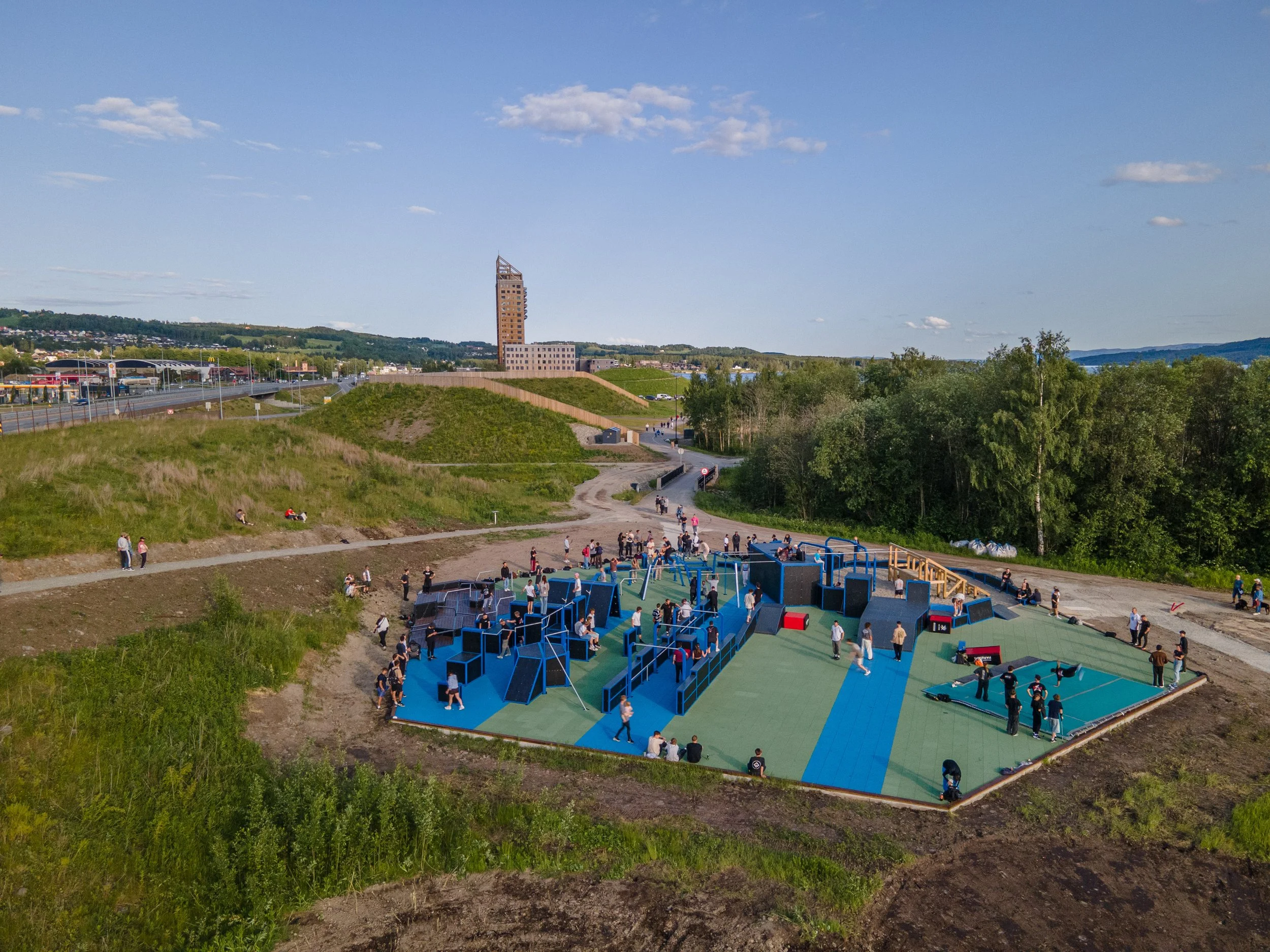
Aerial view of a busy Exeo FlowParks parkour park in active use
Oslo Movement Gathering Festival 2026

Bring a parkour park to your community.

Nine steps turn an idea into a finished park. This is the same roadmap communities across Norway have followed to bring a real parkour park to their town. Get a park where you train.

A parkour park starts with the people who train.

This guide is for the athletes, parents, and local supporters who want a real parkour park in their town. It lays out the nine steps that take you from a group chat to a finished installation, and it answers the questions your city council will ask along the way. Exeo FlowParks designs, delivers, and installs parkour and calisthenics parks. Your job is to build the local case. We can help with the rest.

Nine steps from idea to opening day.

1
Build local community support

Gather practitioners, parents, and supporters. Start a group so people can connect and coordinate, and collect the personal stories that show why a park would matter here.

2
Create a compelling presentation

Put together a simple, professional pitch (a PDF or short slideshow) with your vision, design ideas, and the community benefits. This becomes your key tool when you reach out to officials and partners.

3
Share your idea on social media

Go public and bring more people on board, including those who will never train at the park but see its value. Start a "We want a parkour park in [your city]" page, post regularly, and gather signatures. A few hundred followers means a lot to a city council.

4
Engage local government and partners

Send your presentation to officials, request meetings, and show up at community gatherings. Contact several departments to reach the right person, and look at partners like sports clubs, non-profits, and parallel projects in calisthenics, skating, or climbing.

5
Involve the community in design

Collect input from local athletes and children so the park reflects how people will actually use it. Early involvement builds ownership and makes your proposal far stronger.

6
Host a free community jam

Organise a free event to show what parkour brings to a place. Invite officials, and document it with photos and video to demonstrate real demand and energy.

7
Leverage media and storytelling

Reach out to local newspapers, radio, and social channels. Share community stories, testimonials, and examples of successful parks elsewhere to build wider support.

8
Explore funding opportunities

Look past the city budget. Grants, partnerships with schools or clubs, folkehelse and egenorganisert-aktivitet funding, crowdfunding, and local private-sector partners all help. We can advise on funding and applications.

9
Maintain momentum

Keep the energy up with regular events, updates, and content. Show officials and residents that the community is in this for the long term, well before the park opens.

The questions officials will ask, answered.

Who will maintain the park?
Our parks are designed to be durable and low-maintenance, and we provide a simple maintenance plan. The community can run clean-up jams a few times a year to keep it in top condition. Formally, maintenance falls to the land or object owner, unless an existing organisation (for example a local parkour club) takes that responsibility on.
What about safety and liability?
Parks are designed and built to the European parkour safety standard, co-authored by parkour practitioners, architects, and engineers. As long as that standard is upheld and the correct signage is installed, liability is properly managed. We are also working with organisations to adapt similar standards internationally.
How can we justify the cost?
Parkour parks are cost-effective. There is no expensive equipment to run, they are open to all ages, and they double as a playground. For a comparable size, they tend to be more affordable than a skate park while reaching a broader group of users, which makes them a strong investment in both sport and community wellbeing.
How do we make sure the park won't be underused?
Involving the community from the start gives the park a strong sense of ownership. Local athletes host jams, workshops, and events, while families and fitness groups use the space day to day. With good design, the right location, and features like QR-coded challenges, the park stays dynamic and well used.
How does this fit the city's wider vision?
A parkour park is a versatile community asset. It complements existing recreational areas, contributes to folkehelse, supports egenorganisert aktivitet, and fits naturally into broader wellness and urban development plans.
Want one in your town?

Get a park where you train.

Tell us your town, your group, and roughly the site you have in mind. We'll help you build the case and design a park that fits. We work with Norwegian municipalities, schools, and sports clubs, and we know the procurement process.

See delivered parks →